

How to Wash Outdoor Clothing in Campsite Laundry Facilities
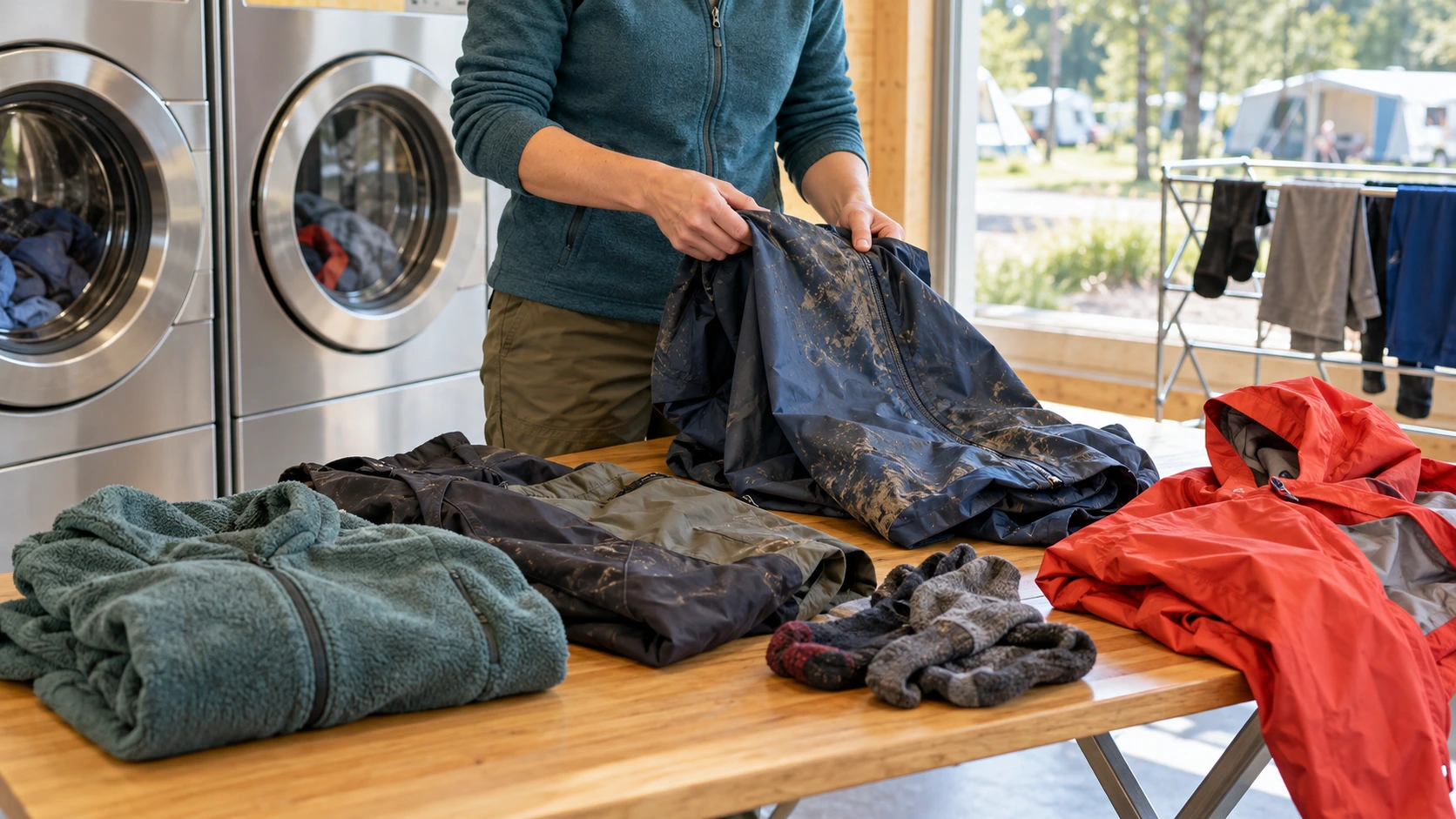
Mud on a hiking jacket and damp socks can become a nuisance during a longer camping stay. Campsite laundry facilities make it easier to refresh outdoor clothing, but the right wash depends on the fabric and its care label. A quick check before loading the machine can help preserve a rain jacket’s finish, prevent shrinkage and leave enough time for everything to dry.
Check the label before sorting the load
Outdoor clothes may look equally rugged, yet they often need different treatment. Read the care label on each item for the permitted wash temperature, cycle and drying method. If a label has worn away, choose a gentle approach rather than assuming the garment can tolerate a hot wash or tumble dryer.
Sort by care needs as well as colour. Base layers, fleece, cotton camp clothes and waterproof shells do not necessarily belong in one load. Separate heavily muddy items from clothing that only needs freshening, and check pockets for tissues, maps or small gear. Close zips and fasten hook-and-loop tabs so they are less likely to catch on other fabrics. Turning printed or delicate items inside out may also reduce surface wear.
Brush off dried mud before washing, preferably outside and away from shared indoor areas. Removing loose dirt first gives the machine less grit to handle and helps the wash water reach the fabric. Treat a small stain according to the garment’s instructions; rubbing hard can damage a coated or delicate surface.
Choose detergent for the garment, not the whole bag
Ordinary laundry detergent is often suitable for everyday camping clothes, provided the label allows it. Use the amount recommended for the load size and water conditions if those details are available. More detergent does not automatically mean cleaner clothes; residue can remain in fabric when a machine is overloaded, or detergent is used too generously.
Waterproof and water-resistant garments deserve closer attention. Follow the manufacturer’s washing advice, which may call for a product designed for technical outerwear. Fabric softener can interfere with the performance of some outdoor fabrics, so leave it out unless the care instructions specifically permit it. The same caution applies to bleach and strongly scented additives. If the campsite machine has a detergent dispenser, check that you understand which compartment to use before starting.
For example, a muddy pair of cotton trousers and a lightweight rain shell may both need washing after a wet walk. The trousers can follow their normal care label, while the shell should be washed according to its own instructions. Splitting them into suitable loads may take more planning, but it avoids treating two very different fabrics as though they were the same.
Use the shared machines considerately
Before heading to the laundry room, check the campsite’s instructions for access, machine use, and any supplies you need to bring. At a campsite with several washing machines and tumble dryers, availability can still vary as other guests use them. Starting a load when you can return promptly helps keep the facilities usable for everyone.
Look inside the drum for forgotten items or visible dirt before loading your clothes. Follow any posted directions, leave enough space for the laundry to move freely, and select the cycle and temperature allowed by the most delicate item in that load. If a machine offers unfamiliar settings, use its displayed guidance rather than guessing from the name of a cycle.
A short stay may call for a small, well-chosen wash instead of emptying the entire clothing bag. Clean socks and base layers can make the next outing more comfortable, while a jacket that only has loose surface dirt might simply need brushing and airing. Washing only what needs it also reduces the amount of damp clothing you have to manage afterward.
Dry clothes without undoing the wash
Drying is often the trickiest part of campsite laundry, particularly in wet weather. Check every garment’s label before using a tumble dryer. Heat can harm some elastic fibres, coatings or garment components, and items that can be tumble dried may still require a low setting. Remove clothes when the cycle finishes so the next guest can use the machine.
Air drying is useful for garments whose labels rule out tumble drying. Choose a permitted drying area with airflow, spread items out rather than piling them together, and keep them clear of shared walkways and equipment. Hanging a thick fleece in a tight fold slows drying because the inner layers stay damp. If the weather is uncertain, wash early enough to give clothing time to dry before you need to pack it.
Consider a family preparing for another hike the next morning. Washing every jacket late in the evening creates a problem if some cannot go in the dryer. Washing the essential layers earlier, then airing or spot-cleaning the remaining items as appropriate, gives everyone a better chance of having usable clothes by departure.
A water-repellent shell may also need extra care after washing. Its outer fabric may stop shedding water as well as it once did, even though the jacket has been cleaned. Check the garment maker’s guidance before applying any treatment or using heat to restore its finish; the appropriate method depends on the particular garment.
For more detailed information on this topic, read our guide on Why Motorhome Camping Is Ideal for a Flexible Family Holiday.
Pack clean clothes only when they are dry
Feel cuffs, waistbands, and thicker seams before folding laundry. These areas can hold moisture after the rest of a garment feels dry. Packing slightly damp clothing into a closed bag can leave it smelling stale and may dampen nearby gear. If time is short, keep it separate and allow it to air whenever you can.
A sensible campsite laundry routine starts with care labels, separates items by fabric needs, and leaves enough time for drying. Shared machines are convenient during a longer stay, but the best result comes from choosing the right wash for each garment and planning around when you will next need to wear it.